

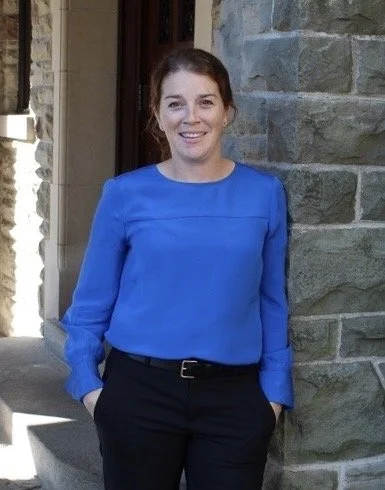
Megan Shore, PhD
Academic · Diagnostic Harm & AI Readiness Researcher · Author of Trauma Realism.
I am an Associate Professor at King’s University College, Western University (London, Ontario), and in interdisciplinary research working at the intersection of diagnostic harm, trauma systems, and AI readiness. My work examines how systems shape human experience, particularly as people navigate uncertainty, vulnerability, and care.
My Work
My academic work began in religion, conflict resolution, and post-conflict reconstruction, examining how people and institutions respond after violence and systemic rupture. Over time, that work developed into a broader study of trauma as a systems phenomenon: how structure can protect people, fail them, or create additional harm. Today, I bring that lens to healthcare, where my research focuses on diagnostic harm, the Diagnostic Trauma™ framework, and the challenge of building AI-enabled health systems that are not only technically capable, but ready for the complexity of human experience.
Writing & Trauma Realism
Alongside my academic work, I write fiction and narrative work grounded in trauma realism, an approach that resists tidy stories of recovery and instead tells the truth about how people live after experiences that change them. My writing explores rupture, survival, relationships, meaning, and the ordinary realities of continuing when life does not return to what it was before.
Background
My academic training spans peace and conflict studies, international development, religion, and conflict resolution. I completed my PhD at the University of Leeds (UK), where my research examined religion and post-conflict reconstruction, with particular focus on South Africa’s Truth and Reconciliation Commission. That work established a question that continues to shape my research today: how do systems affect people during periods of profound uncertainty and change, and what determines whether those systems protect people or cause further harm?
Current Research
My current research focuses on diagnostic harm and AI readiness in health systems. I am developing Diagnostic Trauma ™, a framework for understanding harm created by the diagnostic process itself, including the effects of delay, dismissal, uncertainty, communication, and fragmented pathways. I am particularly interested in how this work can inform the design and implementation of AI-enabled health systems so that new technologies do not reproduce or amplify harms already embedded in diagnostic pathways.